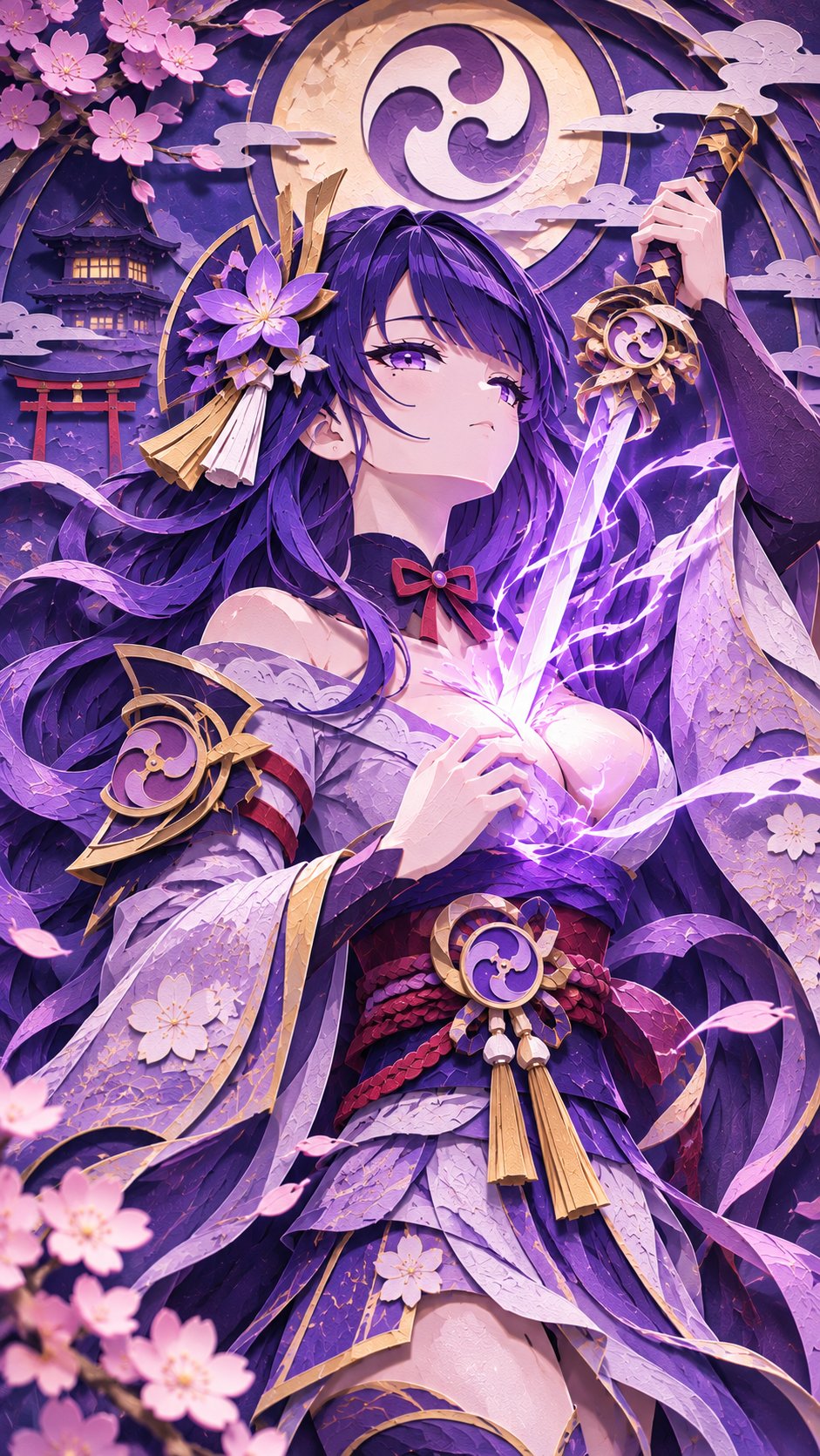
想创作具有影棚级质感且情绪松弛的艺术大片,却苦于无法完美呈现 立体剪纸二次元角色插画 中复杂的细节与光影质感?
Nanobanana Pro 完美还原了画面的细腻纹理与高级氛围,助您精准定格具备顶尖商业杂志感的视觉瞬间。
复制这套免费提示词,一键复制进顶级模型,秒出大片。
Struggling to create 3D Paper Cut Anime Character Illustration with a high-end editorial style? Nanobanana Pro captures the textures and lighting details perfectly for a hyper-realistic masterpiece. Get FREE Prompt, enjoy one-click copy, and create instantly!
Prompt (English):
ADVERTISEMENT
9:16 vertical version, single independent high-completeness 3D paper-cut anime character illustration.

The main subject of the picture is the character {Character Name}, accurately retaining the character's most recognizable core visual features, including hairstyle, hair color, eye characteristics, facial temperament, clothing silhouette, iconic accessories, representative props, classic color schemes, and the character's overall sense of identity, so that viewers can identify the character at first glance.

On the basis of maintaining the character's original recognition, fully translate the character into high-end layered paper-cut anime illustration / multilayer paper sculpture anime art / multi-layer 3D paper sculpture anime illustration style.

【Overall Paper Sculpture Style】

The character and background are all formed by layering exquisite cut paper pieces layer by layer.

Hair, facial contours, eyes, eyelashes, clothing structures, fabric folds, accessories, weapons, patterns, energy elements, and background scenes all have clear and definite paper sculpture layering relationships.

Each layer of paper has:

Real paper thickness,
Clear and sharp cut edges,
Delicate and natural paper fiber texture,
Slight surface embossing and paper texture,
Stable and natural shadows between layers,
Clear foreground, midground, and background depth relationships.
There must be real occlusion and shadow changes between paper layers, with moderately deepened shadows near the paper layer joints, making the character present a clear 3D relief effect.
Overall effect should be similar to a combination of high-end handmade paper sculpture art, exquisite paper art installations, collector-level 3D illustrations, and exquisite anime character designs.
Do not want an ordinary flat collage feel, do not want a plastic model feel, do not want a resin figure texture, do not want an ordinary 3D rendering feel.
【Character Design】
Only one character appears in the frame.

Character is located in the main visual center of the picture, using a half-body, seven-tenths body, or near-full body composition, automatically choosing the most appropriate display range based on the character's own styling.

Character posture is natural, beautiful, and has character personality, not using stiff standard standing poses.

Character expression, gaze, and body language should fit the character's own identity and personality, such as calm, elegant, gentle, mysterious, majestic, lively, aloof, dangerous, or a sense of divinity.

Character face maintains a delicate and high-end anime aesthetic:

Facial features are clear,
Face shape is natural and coordinated,
Eyes have the character's own characteristics,
Facial structure is clean,
Avoid excessive neoteny,
Avoid chibi proportions,
Avoid exaggerated cute big heads.

Hair is expressed using a multi-layered paper-cut structure.

Different hair bundles have front and back layers, and some hair tips and strands form exquisite decorative paper-cut silhouettes, giving the hairstyle both a sense of anime flow and paper sculpture design.

Clothing must retain the original design logic of the character.

Collars, cuffs, hemlines, capes, belts, armor, accessories, patterns, and decorative structures are expressed through paper pieces of different thicknesses and levels, without simplifying complex clothing into ordinary color blocks.

【Scene and Character Theme Automatic Extension】
Background is automatically generated as a matching 3D paper sculpture stage based on the character's own worldview, attributes, profession, faction, abilities, regional culture, or visual symbols.
Scene is not an ordinary realistic background, but a layered space built around the character with a sense of collection cards, stage installations, and 3D paper theaters.
Based on the character's characteristics, automatically select and combine:
Flowers, leaves, petals, moon, sun, star trails, clouds, fog, water waves, snowflakes, ice crystals, flames, feathers, swarms of butterflies, architectural silhouettes, arches, window frames, shrines, torii gates, castles, mechanical structures, emblems, family crests, fantasy totems, magic circles, energy trajectories, weapon silhouettes, character representative symbols.
These elements must surround the character to form a layered surrounding relationship of foreground, midground, and background.
Avoid all elements being stuck on the same plane.

Picture can use circular, arched, stained glass windows, moon discs, badges, architectural frames, or paper sculpture stage structures to form visual enclosure, but cannot block the character's core face and important character features.

【Composition and Space】

9:16 vertical version.

Single person subject.

Character is the absolute visual center.

Overall composition is stable, exquisite, and has poster-level completeness.

Leave an appropriate amount of breathing space around the character, do not cram decorative elements all over the picture.

Foreground allows a small amount of large paper sculpture elements to create depth of field, such as petals, leaves, energy fragments, clouds, feathers, or parts of weapons.

Character is located in the core layer of the midground.
Rear side establishes depth through character-themed buildings, emblems, moon discs, totems, energy structures, or natural scenery.
Emphasize the real spatial distance between multiple layers of paper sculptures.
Prohibit all paper layers from being tightly packed together.
Prohibit dense background elements from causing the character to not stand out.
【Color Control】
Colors are strictly based on the character's original representative colors, not randomly changing the character's classic color scheme.
Establish clear:
Primary color,
Secondary color,
Neutral color,
Highlight color,
Accent color.
Picture must have clear three-level color scales of deep, medium, and light.
Do not brighten the whole picture to show "transparency."
Do not convert all character primary colors into light or pastel colors.
Overall exposure remains normal to bright, but high-key overexposure is prohibited.
Bright areas stay clean, but must retain details.
Dark areas must exist, but not dead black.
Midtones must be rich.
Picture reserves about 30%–40% of the mid-to-deep visual area for establishing character weight, background depth, and paper sculpture hierarchy.
Dark areas prioritize using deep colors adapted to the character itself, such as:
Deep purple, indigo blue, ink blue, deep red, deep green, charcoal black, dark brown, dark cyan.
Specific colors are automatically matched according to the character theme.
Light-colored paper layers are mainly used for:
Face, partial clothing, flowers, decorative edges, partial highlights, and a small amount of background white space.
Prohibit milky white, light purple, pink, or light blue from covering the whole picture.
Prohibit a uniform light-colored filter from appearing throughout the whole image.
Prohibit large areas of whitening.
Prohibit a white misty feel.
Prohibit aerial perspective from washing away all dark areas.
Final color effect should be:

Vivid, clean, transparent, high-end, with depth changes, visual weight, and a sense of paper art collection.

Achieve:

Bright but not white, vivid but not fluorescent, transparent but with dark areas, light but not losing weight, gorgeous but not tacky.

【Paper Sculpture Shadow and 3D Sensation】

Clear but natural shadows must exist between paper layers.

Shadows come from real paper piece occlusion relationships, rather than ordinary painting shadows.

Each layer of paper edge produces a slight soft projection.

The closer the paper layer is to the foreground, the more obvious the shadow.

The closer to the background, the softer the shadow.

Some large paper layers can produce relatively obvious projections, giving the picture a spatial sense of a real handmade paper sculpture installation.

Prohibit brightening all dark areas.

Prohibit eliminating joint shadows.

Prohibit letting paper layers lose thickness.

Character face remains soft and clean, no heavy shadows or dirty face.

【Luminescence and Energy Control】

If the character has magic, lightning, flames, frost, divine power, energy, auras, or special weapon effects, they are only allowed as local visual focal points.

The total area of the glowing region is controlled at about 5%–10% of the picture.

Glow positions are primarily concentrated on:

Weapons, eyes, character emblems, energy trajectories, a few contour edges, core decorations.
Prohibit the entire character from glowing.
Prohibit the entire background from glowing.
Prohibit large areas of purple, blue, or pink light from covering character skin and clothing.
Prohibit the Bloom from being too strong.

Prohibit highlight overflow.

Paper texture and cut edges must still be preserved around the glowing area.

【Material Performance】

Paper material must be recognizable.

Use the combined texture of high-grade thick cardboard, cotton art paper, light-textured handmade paper, and fine-fiber paper.

Different paper layers allow very slight texture differences.

Some character clothing can simulate original character complex materials through:

Embossing, relief patterns, small gold-edged paper, pearlescent paper, semi-matte paper,

But the overall must maintain paper attributes.
Cannot become a metal model.
Cannot become plastic.
Cannot become ceramic.
Cannot become a resin figure.
【Picture Texture】
High completeness, high-end anime art, collector-level character illustration, exquisite paper sculpture art, exquisite paper texture, delicate paper-cut edges, real paper layer thickness, clear depth, soft natural shadows, visual center is clear, complex but not cluttered, gorgeous but restrained, vivid but not flamboyant.
Final effect should be like a high-end anime character art piece that can be made into a physical 3D paper sculpture framed work.
中文参考:
ADVERTISEMENT
9:16竖版,单张独立高完成度立体剪纸二次元角色插画。

画面主体为角色 {角色名},准确保留该角色最具辨识度的核心视觉特征,包括发型、发色、眼睛特征、面部气质、服装轮廓、标志性配饰、代表性道具、经典配色以及角色整体身份感,使观者能够第一眼识别角色。

在保持角色原始辨识度的基础上,将人物完整转译为高级 layered paper-cut anime illustration / multilayer paper sculpture anime art / 多层立体纸雕二次元插画 风格。

【整体纸雕风格】

人物与背景全部由多层精致切割纸片逐层叠加形成。

头发、面部轮廓、眼睛、睫毛、服装结构、衣料褶皱、饰品、武器、纹样、能量元素以及背景场景,都具有清晰明确的纸雕分层关系。

每一层纸片都具有:

真实纸张厚度,
清晰利落的切割边缘,
细腻自然的纸张纤维纹理,
轻微的表面压纹与纸质肌理,
稳定自然的层间投影,
明确的前景、中景、背景纵深关系。
纸层之间必须存在真实遮挡与投影变化,靠近纸层接缝处具有适度加深的阴影,使人物呈现明显的立体浮雕效果。
整体效果应类似高级手工纸雕艺术、精品纸艺装置、收藏级立体插画与精致二次元角色设计的结合。
不要普通平面拼贴感,不要塑料模型感,不要树脂手办质感,不要普通3D渲染感。
【人物设计】
画面仅出现一名角色。

人物位于画面主要视觉中心,采用半身、七分身或近全身构图,根据角色自身造型自动选择最合适的展示范围。

人物姿态自然、优美、有角色性格,不使用僵硬标准站姿。

人物表情、眼神与身体语言应符合角色本身的身份和性格,例如冷静、优雅、温柔、神秘、威严、活泼、孤高、危险或神圣感。

人物面部保持精致高级二次元审美:

五官清晰,
脸型自然协调,
眼睛具有角色自身特征,
面部结构干净,
避免过度幼态,
避免Q版比例,
避免夸张萌系大头。

头发使用多层剪纸结构表现。

不同发束具有前后层级,部分发梢与发丝形成精致装饰性切纸轮廓,使发型兼具二次元流动感与纸雕设计感。

服装必须保留角色原有设计逻辑。

衣领、袖口、裙摆、披风、腰带、装甲、饰品、纹样与装饰结构,通过不同厚度和层级的纸片表现,不将复杂服装简化为普通色块。

【场景与角色主题自动延展】
背景根据角色自身世界观、属性、职业、阵营、能力、地域文化或视觉符号自动生成相匹配的立体纸雕舞台。
场景不是普通写实背景,而是围绕角色建立具有收藏卡、舞台装置、立体纸剧场感的层叠空间。
可根据角色特点自动选择和组合:
花朵,
树叶,
花瓣,
月亮,
太阳,
星轨,
云层,
雾气,
水波,
雪花,
冰晶,
火焰,
羽毛,
蝶群,
建筑轮廓,
拱门,
窗框,
神殿,
鸟居,
城堡,
机械结构,
徽记,
家族纹章,
幻想图腾,
魔法阵,
能量轨迹,
武器剪影,
角色代表性符号。
这些元素必须围绕人物形成前景、中景、远景的分层环绕关系。
避免全部元素贴在同一平面。

画面可以使用圆形、拱形、花窗、月轮、徽章、建筑框架或纸雕舞台结构形成视觉包围,但不能遮挡人物核心面部和重要角色特征。

【构图与空间】

9:16竖版。

单人主体。

人物为绝对视觉中心。

整体构图稳定、精致、具有海报级完成度。

人物周围保留适量呼吸空间,不将装饰元素全部塞满画面。

前景允许出现少量大型纸雕元素制造景深,例如花瓣、树叶、能量碎片、云层、羽毛或武器局部。

人物位于中景核心层。
后方通过角色主题建筑、纹章、月轮、图腾、能量结构或自然景物建立纵深。
强调多层纸雕之间真实的空间距离。
禁止所有纸层都紧贴在一起。
禁止背景元素密集堆砌导致人物不突出。
【色彩控制】
色彩严格以角色原本的代表色为基础,不随意改变角色经典配色。
建立清晰的:
主色,
辅色,
中性色,
高光色,
点缀色。
画面必须拥有明确的深、中、浅三级色阶。
不要为了体现“通透”而将整个画面全部提亮。
不要将角色主色全部转化成浅色或粉彩色。
整体曝光保持正常偏明亮,但禁止高调过曝。
亮部保持干净,但必须保留细节。
暗部必须存在,但不死黑。
中间调必须丰富。
画面约保留30%–40%的中深色视觉区域,用于建立角色重量感、背景纵深以及纸雕层级。
深色区域优先使用角色自身适配的深色,例如:
深紫,
靛蓝,
墨蓝,
深红,
深绿,
炭黑,
暗棕,
暗青。
具体颜色根据角色主题自动匹配。
浅色纸层主要用于:
面部,
局部服装,
花朵,
装饰边缘,
局部高光,
少量背景留白。
禁止奶白、浅紫、粉色或浅蓝覆盖整个画面。
禁止整张图出现统一浅色滤镜。
禁止大面积泛白。
禁止白雾感。
禁止空气透视把所有暗部洗掉。
最终色彩效果应为:

鲜活,
干净,
通透,
高级,
有深浅变化,
有视觉重量,
有纸艺收藏感。

实现:

明亮但不发白,鲜艳但不荧光,通透但有暗部,轻盈但不失重量,华丽但不俗艳。

【纸雕阴影与立体感】

纸雕层与层之间必须存在清晰但自然的阴影。

阴影来自真实纸片遮挡关系,而不是普通绘画阴影。

每一层纸片边缘产生轻微柔和投影。

越靠近前景的纸层,阴影越明显。

越靠近背景,阴影越柔和。

部分大型纸层可产生较明显的投影,使画面具有真实手工纸雕装置的空间感。

禁止将所有暗部提亮。

禁止消除接缝阴影。

禁止让纸层之间失去厚度。

人物脸部保持柔和干净,不能出现重阴影脏脸。

【发光与能量控制】

如果角色具有魔法、雷电、火焰、冰霜、神力、能量、光环或特殊武器效果,只允许作为局部视觉焦点。

发光区域总面积控制在画面的约5%–10%。

发光位置优先集中于:

武器,
眼睛,
角色纹章,
能量轨迹,
少量轮廓边缘,
核心装饰。
禁止整个人物发光。
禁止整个背景发光。
禁止大面积紫光、蓝光、粉光覆盖角色皮肤和服装。
禁止Bloom过强。

禁止高光溢出。

发光区域周围仍然必须保留纸张纹理与切割边缘。

【材质表现】

纸张材质必须可辨认。

使用高级厚卡纸、棉质艺术纸、轻纹理手工纸、细纤维纸张的综合质感。

不同纸层允许存在非常轻微的纹理差异。

部分角色服装可通过:

压纹,
浮雕纹,
细小金边纸,
珠光纸,
半哑光纸,

模拟原角色复杂材质。

但整体必须保持纸张属性。
不能变成金属模型。
不能变成塑料。
不能变成陶瓷。
不能变成树脂手办。
【画面质感】
高完成度,
高级二次元美术,
收藏级角色插画,
精品纸雕艺术,
精致纸张纹理,
细腻剪纸边缘,
真实纸层厚度,
清晰纵深,
柔和自然阴影,
视觉中心明确,
复杂但不杂乱,
华丽但克制,
鲜活但不浮夸。
最终效果应像一张可以被制作成实体立体纸雕装裱作品的高级二次元角色艺术图。