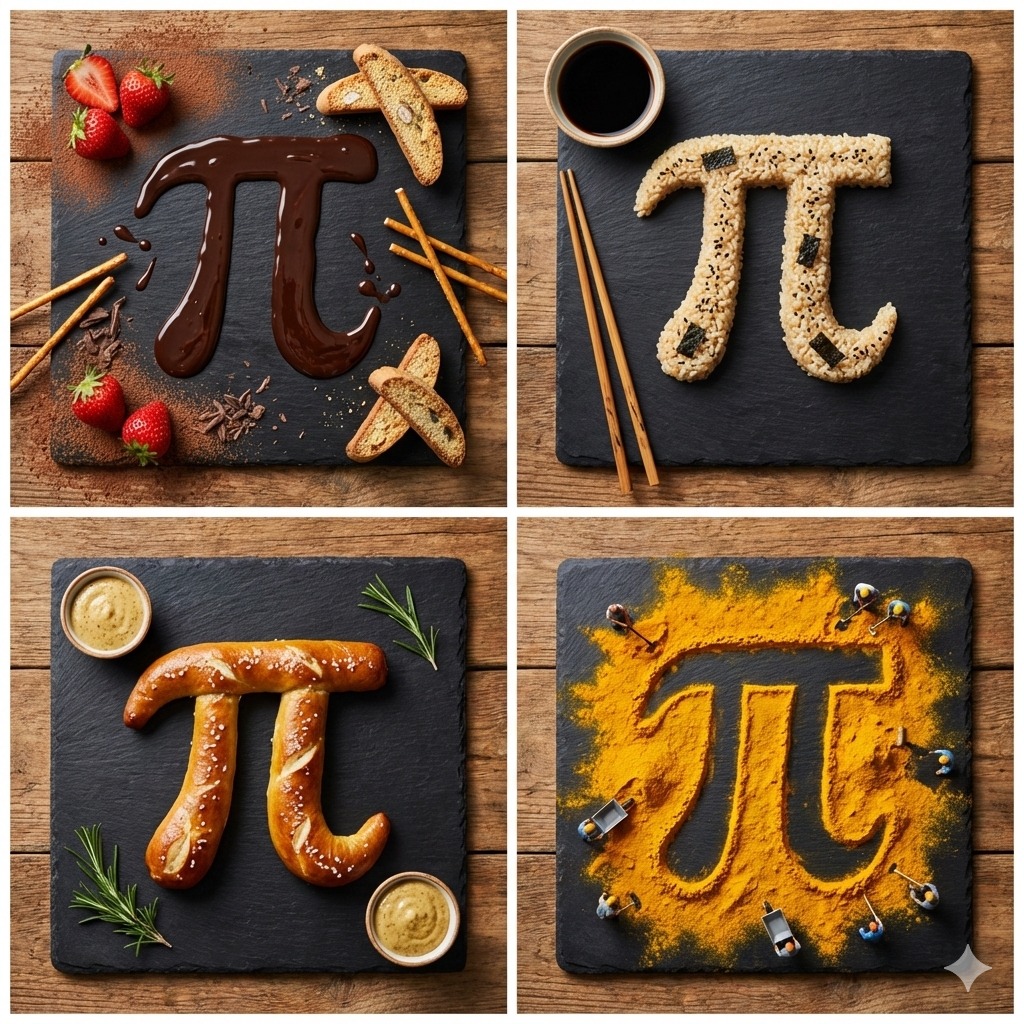
苦恼于符号排版缺乏真实材质的张力或微缩景观的艺术感?Nanobanana Pro 完美融合黑岩板质感与四种创意食材的细腻肌理。提供免费提示词资源,支持一键生成/复制,点击即刻定格这场食味与美学交织的视觉盛宴! Struggling to give symbolic typography material depth or the artistic charm of miniature landscapes? Nanobanana Pro perfectly blends black slate textures with the delicate grains of creative ingredients. Get free prompts with one-click generate/copy—click now to capture this visual feast of taste and aesthetics!
Prompt (English):
ADVERTISEMENT
Input A is a Mathematical Symbol, Letter, or Constant (e.g., Pi, Sigma, Infinity, Delta).
Generate   4 Distinct Culinary Mediums   to render the symbol:
Medium 1 (The Liquid):  A viscous sauce or dip.
(e.g., Red Salsa, Pesto, Melted Chocolate).
Medium 2 (The Aggregate):  A grain or assembled unit.
(e.g., Sushi Rice, Corn Kernels, Coffee Beans).
Medium 3 (The Solid):  A baked or cooked structure.
(e.g., Pizza Crust, Pretzel Dough, Grilled Meat).
Medium 4 (The Powder):  A vibrant spice or dust.
(e.g., Turmeric, Flour, Matcha Powder).
2.   Container
Goal: "Edible Typography" Food Photography.
Format:  A   2x2 Grid   Composition.
The Canvas:  Each panel features a textured   Black Slate Serving Platter   resting on a rustic wooden table.
The Subject:  The "Symbol" (Input A) is formed centrally on the slate using the specific Medium for that panel.
3.  Composition (The Plating):
Panel 1 (Liquid/Messy):  The symbol is drawn in sauce. Surrounded by dipping items (Chips, Bread) and garnishes (Cheese crumbles, Herbs).
Panel 2 (Aggregate/Precise):  The symbol is formed by tightly packed grains or sushi rolls. Surrounded by tools (Chopsticks, Spoons).
Panel 3 (Solid/Structural):  The symbol is baked or carved. It has height and 3D volume. Decorated with toppings (Olives, Pepperoni).
Panel 4 (Powder/Terrain):  The symbol is negative space or a piled ridge of spice.
Micro-Detail:  Tiny   1:87 Scale Figures   (Workers/Miners) are interacting with the powder, treating it like a landscape (shoveling the turmeric, laying tracks).
4.  Syntax (Appetite Appeal):
Color:  High saturation. The food colors (Red sauce, Yellow spice, White rice) must pop against the black stone.
Texture:  Visible moisture in sauces, crumb in bread, and grain in spices.
Output:   ONE image, 1:1 Aspect Ratio, 2x2 Grid, Food Photography, "Flat Lay" aesthetic, High Texture.
中文参考:
ADVERTISEMENT
输入 A 是一个数学符号、字母或常数(例如 Pi、Sigma、Infinity、Delta)。
生成 4 种不同的烹饪介质来呈现该符号:
介质 1(液体):一种粘稠的酱汁或蘸料(例如红色 Salsa、Pesto、融化巧克力)。
介质 2(颗粒):一种谷物或组合单元(例如寿司米饭、玉米粒、咖啡豆)。
介质 3(固体):一种烘焙或烹饪结构(例如披萨饼皮、椒盐卷饼面团、烤肉)。
介质 4(粉末):一种鲜艳的香料或粉末(例如姜黄、面粉、抹茶粉)。
2. 容器
目标:“可食用字体”食物摄影。
格式:2x2 网格构图。
画布:每个面板展示一块带纹理的黑色岩板餐盘,置于质朴的木桌上。
主体:符号(输入 A)用该面板指定的介质在岩板中央塑形。
3. 构图(摆盘):
面板 1(液体/凌乱):用酱汁绘制符号。周围摆放蘸食小食(薯片、面包)与点缀(奶酪碎、香草)。
面板 2(颗粒/精确):用紧密排列的谷物或寿司卷拼成符号。周围放置工具(筷子、勺子)。
面板 3(固体/结构):符号被烘焙或雕刻,具有高度与 3D 体积。表面装饰配料(橄榄、意大利辣肠)。
面板 4(粉末/地形):符号以负形或堆叠香料脊线呈现。
微细节:1:87 比例小工人/矿工人偶与粉末互动,将其当作景观(铲姜黄、铺设轨道)。
4. 语法(激发食欲):
色彩:高饱和度。食物颜色(红色酱汁、黄色香料、白色米饭)必须在黑色石板上突出。
质感:酱汁可见水分,面包可见碎屑,香料可见颗粒。
输出:单张图像,1:1 宽高比,2x2 网格,食物摄影,“平铺”美学,高质感。