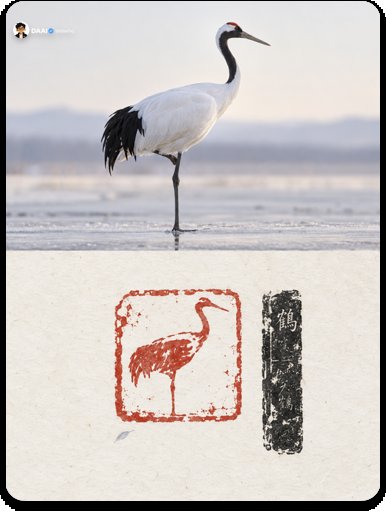
想创作具有影棚级质感且情绪松弛的艺术大片,却苦于无法完美呈现 东方金石篆刻肖形印海报 中复杂的细节与光影质感?
Nanobanana Pro 完美还原了画面的细腻纹理与高级氛围,助您精准定格具备顶尖商业杂志感的视觉瞬间。
复制这套免费提示词,一键复制进顶级模型,秒出大片。
Struggling to create Oriental Epigraphy Pictorial Seal Poster with a high-end editorial style? Nanobanana Pro captures the textures and lighting details perfectly for a hyper-realistic masterpiece. Get FREE Prompt, enjoy one-click copy, and create instantly!
Prompt (English):
ADVERTISEMENT
Please process each photo I upload into a separate high-end design poster; no multi-photo stitching, output each photo individually. Use an overall 3:4 vertical composition, with the top and bottom areas strictly 1:1 in height, each occupying 50% of the frame. The top and bottom halves are spliced directly and cleanly at the midline, without thick dividers, borders, extra frames, or labels; all stylization, paper texture, and color changes occur only in the bottom half.

The top half retains the original photo, maintaining the subject's identity, quantity, structure, posture, orientation, realistic texture, natural light and shadow, and the original color atmosphere, with only slight high-end color grading to give it an art photography and Eastern exhibition image quality. To fit the frame, the environment background can be naturally extended, but the subject must not be stretched, distorted, mirrored, or changed; if the uploaded image itself is an illustration, the top half is kept as is.

The bottom half is a page of a seal album: the center-top features a pictorial seal impression (Xiaoxing Yin) made with cinnabar paste, which compresses the most recognizable subject from the photo above into a seal-engraving style silhouette symbol. Knife marks are visible, lines are archaic, and positive/negative spaces are distinct; it can be in red characters (Zhuwen) or white characters (Baiwen), with square, round, or free-form borders.

The bottom half retains only the minimum information to make the subject instantly recognizable based on the theme: for people, retain the number, posture, orientation, hairstyle, and main clothing color, without depicting facial details; for animals, retain species characteristics, patterns, and posture; for buildings, retain the roofline, main entrance, and proportions; for vehicles, retain orientation, wheels, or hull curves; for landscapes, retain a single horizon, ridge, or shoreline. Delete dense vegetation, repetitive window panes, cluttered backgrounds, and advertising signs.

Beside the seal impression is an ink rubbing of the side inscription (Biankuan) of this seal: several lines of carvings and knife marks are vaguely visible in the black rubbing, forming an echoing relationship of one red and one black, one seal and one rubbing.

Materiality emphasizes realistic seal engraving: the grain and uneven stamping of the seal paste, the broken edges of the border and the chipping of the knife cuts, the fibers and slight bleeding of the Xuan paper, the density of the ink rubbing, and the texture of the paper surface. Avoid digital seal assets, perfect vector borders, and 3D rendering.

Composition: The seal impression occupies only about 20%–25% of the width of the bottom half, while the side inscription rubbing is narrower and longer; the two are placed in a staggered manner, with white space accounting for no less than 70%.

Color: Cinnabar red, ink black, and Xuan paper white constitute all colors; only one color extracted from the photo above is allowed to appear as a tiny pencil annotation.

Text: The carvings in the side inscription rubbing and a line of very small text in the corner of the page (seal name, size), with no restriction on language.

The overall presentation is an Eastern epigraphy visual composed of pictorial seal impressions, side inscription ink rubbings, archaic knife marks, and vast white space. The core principle is: carve a moment into a stone, then print it. Avoid digital seal assets, full-page seals, cheap "Guochao," excessive symmetry, cartoonishness, and templated logos.
中文参考:
ADVERTISEMENT
请将我上传的每一张照片分别制作成一张独立的高级设计海报,不多图拼接,每张照片单独输出。整体采用 3:4 竖版构图,上下两个区域高度严格 1:1,各占画面 50%。上下两格在中线处直接、干净地拼接,不加粗分隔条、边框、额外画格或标签;所有风格化处理、纸张肌理与色彩变化都只发生在下半部分。

上半部分保留原始照片,保持主体身份、数量、结构、姿态、朝向、真实质感、自然光影与原有色彩氛围,仅进行轻微高级调色,使其具有艺术摄影与东方展览图像质感。为适配画幅,可自然扩展环境背景,但不得拉伸、扭曲、镜像或改变主体;若上传的图像本身是插画,则上半部分照原样保留。

下半部分是**一页印谱**:中央偏上是一方用朱砂印泥钤出的**肖形印印蜕**,印面把上方照片中最具识别性的主体压缩为一个**篆刻式的剪影符号**,刀痕可见、线条古拙、正负形分明,可以是朱文或白文,方形、圆形或随形边框。

下半部分按题材只保留让主体一眼可辨的最少信息:人物保留数量、姿态、朝向、发型与服装主色,不刻画五官细节;动物保留物种特征、花纹与姿态;建筑保留屋顶走势、主要入口与比例;交通工具保留朝向、车轮或船身弧线;风景保留一条地平线、山脊或岸线。删除密集植被、重复窗格、杂乱背景与广告招牌。

印蜕旁边是这方印侧面**边款的墨拓**:黑色拓片中隐约可见几行刻字与刀痕,形成一红一黑、一印一拓的呼应关系。

材质强调真实篆刻:印泥的颗粒与压印不均、边框的残破与刀口的崩口、宣纸的纤维与轻微晕染、墨拓的浓淡与纸面凹凸。避免数码印章素材、完美矢量边框和 3D 渲染。

构图:印蜕只占下半部分宽度约 20%–25%,边款拓片更窄更长,两者错落放置,纸白不少于 70%。

色彩:朱砂红、墨黑与宣纸白构成全部色彩,只允许从上方照片中提取一种颜色以极小的铅笔注记出现。

文字:边款拓片中的刻字与页面角落一行极小的小字说明(印名、尺寸),不限制语种。

整体呈现**肖形印蜕、边款墨拓、刀痕古拙与大量纸白**构成的东方金石视觉。核心原则是:把一个瞬间,刻进一方石头,再印下来。避免数码印章素材、满版印章、廉价国潮、过度对称、卡通感和模板化 logo。